
A working guide to the valley, its neighborhoods, and what the listing photos leave out.
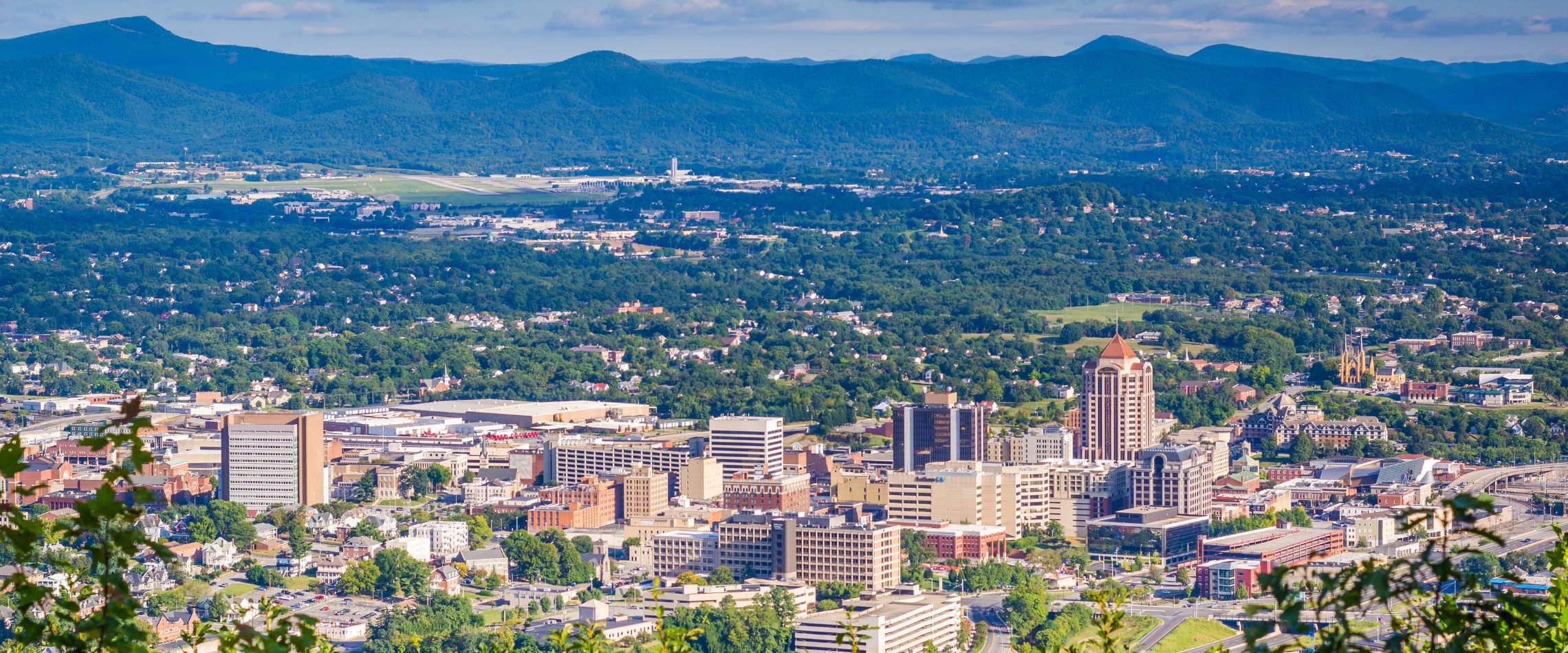
North Roanoke County
Stretching north of the city toward the Botetourt County line and the I-81 corridor. Housing runs from mid-century subdivisions through newer construction to properties on larger lots.
- I-81 and I-581 within a few minutes
- Single-family homes, townhomes, and newer residential development
- Shopping and services along the Hershberger and Plantation Road corridors
- Parks, trails, and outdoor recreation nearby
- Straightforward routes toward Botetourt County, Salem, and Downtown
Downtown Roanoke
The valley’s only genuinely urban residential option. Historic commercial buildings now hold apartments, condominiums, and loft-style residences alongside restaurants, offices, museums, and entertainment venues. The City describes it as a compact, mixed-use district with a high degree of pedestrian, bicycle, vehicle, and transit connectivity.
- Condos, apartments, and loft conversions
- Roanoke City Market and Market Square
- Restaurants, breweries, coffee shops, and entertainment
- Museums, galleries, and cultural attractions
- Historic architecture alongside renovated properties
- Roanoke Valley Greenway access
- Walking distance to Carilion Roanoke Memorial Hospital and the Virginia Tech Carilion campus
Worth knowing: inventory downtown is small and turns over slowly. If this is what you want, it’s a waiting game rather than a shopping trip.
Southeast Roanoke
Several long-standing neighborhoods east and southeast of Downtown, with a mix of residential, commercial, and industrial property. Housing varies considerably from one street to the next — more so here than almost anywhere else in the city.
- Residential neighborhoods dating to several architectural periods
- Five minutes to Downtown
- Roanoke River and greenway access
- Routes toward Vinton and eastern Roanoke County
- Renovated properties alongside homes that haven’t been updated yet
Old Southwest
A designated historic district just south of Downtown, dense with late-1800s Victorians. Beautiful, and genuinely demanding. Many have been restored, many are mid-restoration, and the historic district guidelines constrain what you can change on the exterior.
- Late Victorian and early-twentieth-century architecture
- Walking distance to Downtown and the Market
- Historic district design guidelines apply
- A wide range of condition, from fully restored to significant project
Buy here because you want the project, not in spite of it.
Southwest Roanoke County
Extending toward Cave Spring, Hidden Valley, Oak Grove, and the Route 221 corridor. Mid-century neighborhoods, contemporary subdivisions, and homes on larger parcels.
- Wide selection of single-family housing
- Subdivisions of most eras, plus newer communities
- Townhomes and condominiums in some sections
- Larger lots and lower-density development in places
- Routes 419, 221, and 220
- Shopping, restaurants, medical offices, and everyday services throughout
- Ten minutes to Salem and southwest Roanoke City
Raleigh Court, Grandin Village & Wasena
Three of Roanoke’s best-known traditional city neighborhoods, and the most walkable part of the valley. Grandin Village is the commercial strip; Raleigh Court and Wasena are the residential neighborhoods around it. Wasena developed as one of Roanoke’s early suburbs and retains much of its 1920s character.
- Craftsman, bungalow, Colonial Revival, and other traditional styles
- Grandin Village shops, restaurants, and businesses
- The historic Grandin Theatre, still operating
- Wasena Park and Roanoke River Greenway access
- Tree-lined streets and sidewalks through most sections
- Downtown and Towers Shopping Center within a few minutes
Two practical notes. Lots here are small, and the walkability is priced in. Parts of Wasena sit low near the river, so flood plain is a specific question worth asking rather than assuming.
Northwest Roanoke
A large portion of the city containing numerous residential neighborhoods. Housing varies substantially — older city homes, brick ranches, traditional two-story properties, townhomes, and more.
- Broad range of home styles and property types
- Some of the more attainable entry points inside city limits
- Williamson Road, Hershberger Road, Orange Avenue, and I-581
- Valley View Mall and surrounding retail
- Parks and recreational facilities throughout
- Quick connections to Downtown and North Roanoke
Hollins Area
Spanning parts of northern Roanoke City and Roanoke County near Hollins University, with access to both the urban core and communities to the north.
- Subdivisions and residential streets of varying eras
- Single-family homes, townhomes, and other housing types
- Hollins University
- Plantation Road, Williamson Road, I-81, and I-581
- Shopping, restaurants, and services nearby
- Easy travel toward Botetourt County and Downtown
South Roanoke & Crystal Spring
At the base of Mill Mountain, mixing historic architecture, long-established residential streets, neighborhood businesses, and newer development. Notable for its proximity to Carilion Roanoke Memorial Hospital and the Virginia Tech Carilion medical and research campus.
- Historic and architecturally distinctive homes
- Condominiums, townhomes, and newer housing in places
- Crystal Spring Avenue restaurants and businesses
- Carilion Roanoke Memorial Hospital and the Virginia Tech Carilion campus
- Mill Mountain Park and the Roanoke Star
- Roanoke River Greenway
- Five minutes to Downtown
The terrain climbs here, which matters more than buyers expect. Generally the highest price per square foot in the city.
Tanglewood, Electric Road & Route 419
One of the valley’s primary commercial and residential corridors, connecting southwest Roanoke County with the city and running to Route 220. Includes the Tanglewood area and numerous residential communities just beyond the commercial centers.
- Tanglewood and the Route 419 commercial corridor
- Extensive shopping, dining, and professional services
- Medical and healthcare offices
- Single-family neighborhoods throughout the surrounding area
- Townhomes, condominiums, and apartments
- Routes 220 and 419, and southwest Roanoke County
- South Roanoke, Cave Spring, Downtown, and the Blue Ridge Parkway all close
What surprises people who move here
A steep driveway is charming in June and a real problem during an ice storm.
The hills are not decorative. Terrain shows up in ordinary life. Ask about the grade, and ask which way it faces — south-facing driveways clear themselves, north-facing ones stay glazed for days.
Winter is unpredictable rather than severe. Some years barely register. Others bring ice storms that take out power for a while. Generators are more common here than newcomers expect.
The trains are real, and people feel strongly about them in both directions. Freight still moves through. Some buyers hear it once and cross a street off the list. Others tell me months later that they sleep better than they have in years. There’s no right answer, and I’ve stopped trying to predict which way someone will go. What I can do is tell you which streets are affected before you fall in love with a house.
The housing is old. Most of the city’s residential core went up between 1900 and 1950, one house at a time. Knob-and-tube wiring still turns up, original windows are common, and square footage tends to be spread across more, smaller rooms than modern buyers expect. New construction is mostly outside the city.
Twenty minutes is considered a long drive. You’ll find this ridiculous for about six months and then you’ll agree with it.
Schools
Homes inside the city are served by Roanoke City Public Schools; homes in the county are served by Roanoke County Public Schools, and the boundary isn’t always where people assume. Attendance zones can also change.
I don’t rate schools, and I’d be cautious about any agent who does — it’s outside my expertise and legally fraught. What I can do is tell you exactly which division and zone a specific address falls in, and point you to the division’s own reporting and Virginia Department of Education data so you can evaluate against what matters to your family.
Finding your place in the valley
The advantage of looking here is the variety within a compact region. You might be after:
- A historic home with original architectural detail
- A downtown condo or loft
- A traditional neighborhood near restaurants and the greenway
- A brick ranch in an established subdivision
- A newer home with modern systems
- A townhome or low-maintenance property
- Land and space outside the urban core
- Easy access to healthcare, shopping, recreation, or the interstates
Rather than deciding which neighborhood is “best,” the more useful question is which location and which property match what actually matters to you.
Tell me what you’re looking for — home style, price range, acreage, commute, proximity to specific amenities — and I’ll help you explore Roanoke City, Roanoke County, and the surrounding valley.
Have a question about a specific street?
Grade, drainage, train noise, flood plain, what sold nearby and for how much. Ask me something specific and I’ll give you a specific answer.
Equal Housing Opportunity
I provide real estate services in accordance with the Fair Housing Act and applicable federal, state, and local fair housing laws. Property searches and neighborhood information are based on objective criteria supplied by the client, such as price, property characteristics, location, commute, amenities, and other housing-related preferences.